Plas Madoc: A return to the elements in North Wales
There is something deeply restorative about places that draw you back outdoors. Places where mornings begin with mist hanging low across the valley, where supper is cooked over charcoal instead of hurried indoors, and where the day seems to follow the weather rather than the clock.
Plas Madoc is one of those places.
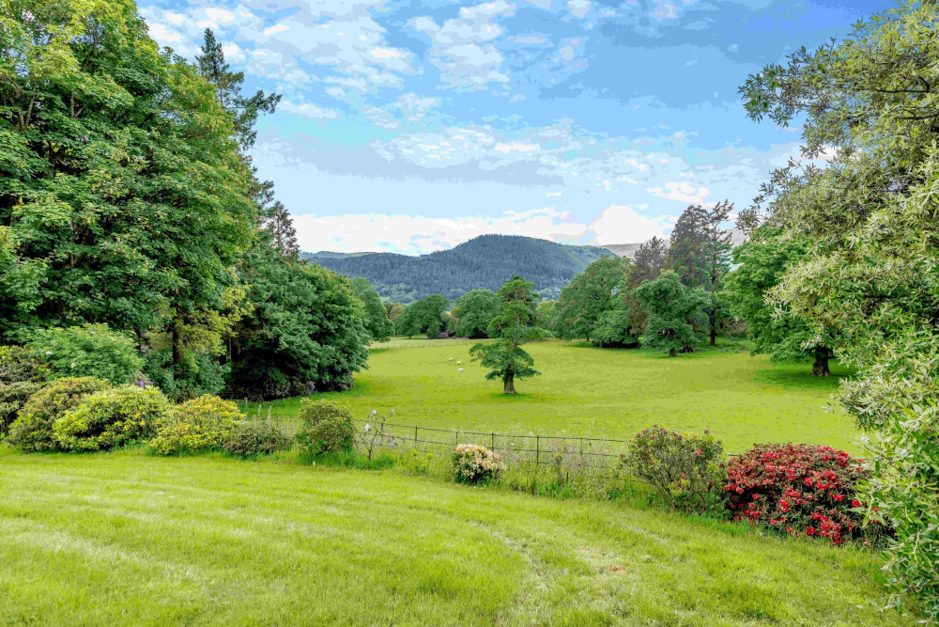
Hidden within more than 120 acres on the eastern side of the Conwy Valley, the estate feels wonderfully removed from modern life without ever feeling staged or contrived. A long driveway curves through the landscape towards the old Coach House and Lodge, passing towering specimen trees, wide lawns and woodland that has shaped the estate for generations. In spring, daffodils scatter themselves across the grounds before bluebells take over beneath the trees. Even now, the old grass tennis court remains, softened by time and weather.
And everywhere, there is space: space to walk, to cook, to sit beside the fire, to properly switch off.
For Ieuan and Cath Edwards, joint custodians of Plas Madoc, the estate was never simply about creating somewhere impressive to stay. While Ieuan’s family business, Edwards of Conwy, has spent decades championing Welsh produce and local farming, their vision for Plas Madoc was something far more rooted than that: a place connected to nature, food, landscape and wellbeing in a genuine way.
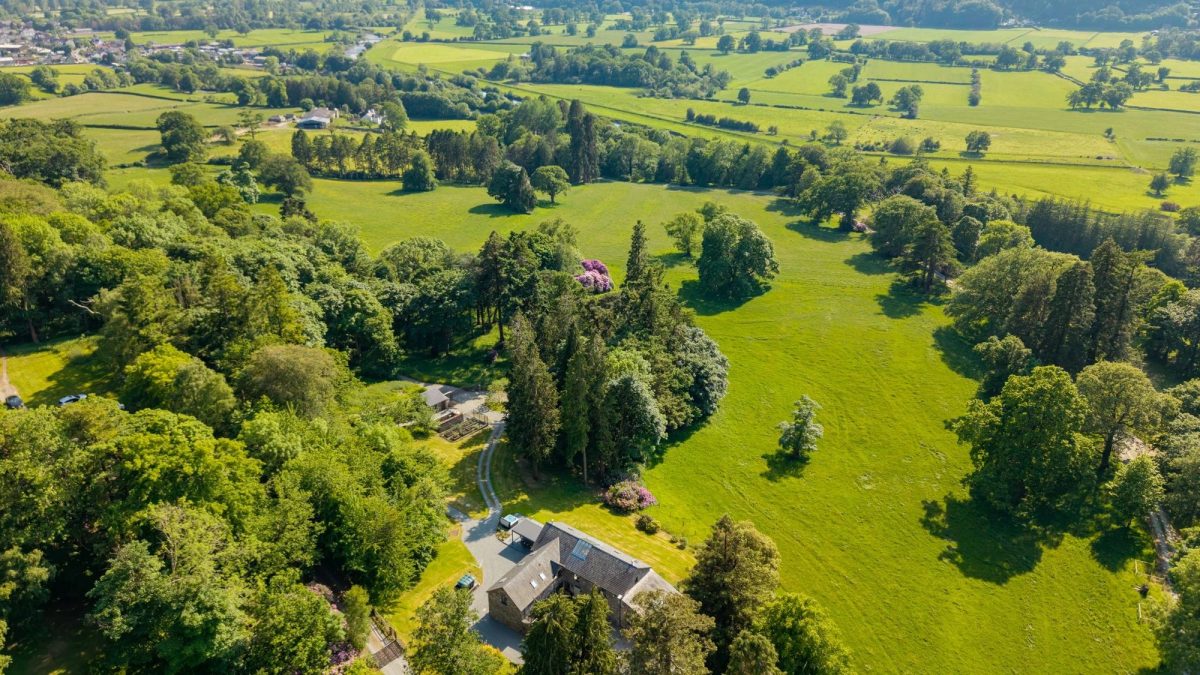
And, you can feel that philosophy throughout the estate.
Guests are encouraged to pick herbs, vegetables and salads from the raised planters before cooking outdoors overlooking the Conwy Valley, with the dark sweep of Gwydir Forest rising towards Eryri beyond. The outdoor kitchen itself has been designed with remarkable care; not as an afterthought, but as part of the heart of the stay. There is a large egg-style charcoal barbecue, an Italian pizza oven, stainless steel preparation areas, a proper fridge, heating beneath the pergola and a roof that opens above you while you cook.
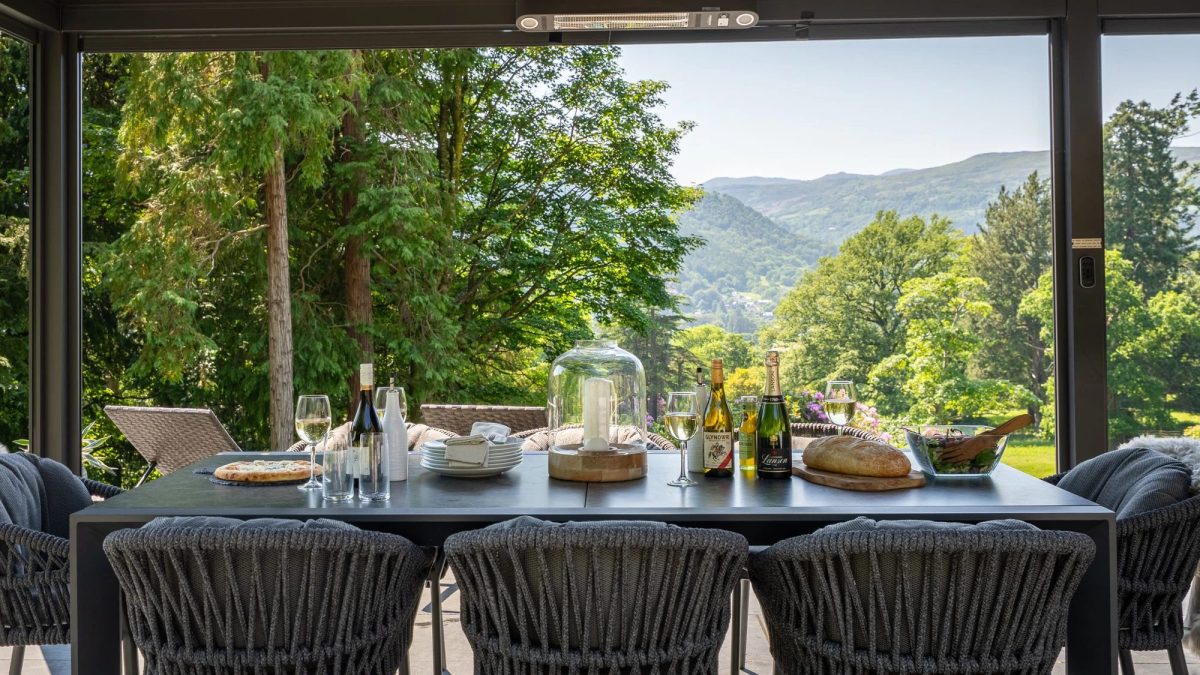
Beyond it, the land falls away towards the trees and hills beyond.
It is easy to picture how evenings settle here. Smoke rising from the barbecue as the air cools, with wine open on the outdoor table, and herbs scattered over food moments after being picked. And as the last light begins to disappear behind the valley, the glow from beneath the pergola starts to cut through the dusk.
And despite the scale of the estate and the attention to detail throughout, there is nothing ostentatious about Plas Madoc. The luxury here comes from space, craftsmanship and thoughtfulness rather than excess. Deep sofas positioned towards the views. Wood burners lit after long walks. Huge windows framing the landscape outside. Bedrooms designed in calm earthy tones that mirror the greens and browns of the estate itself.
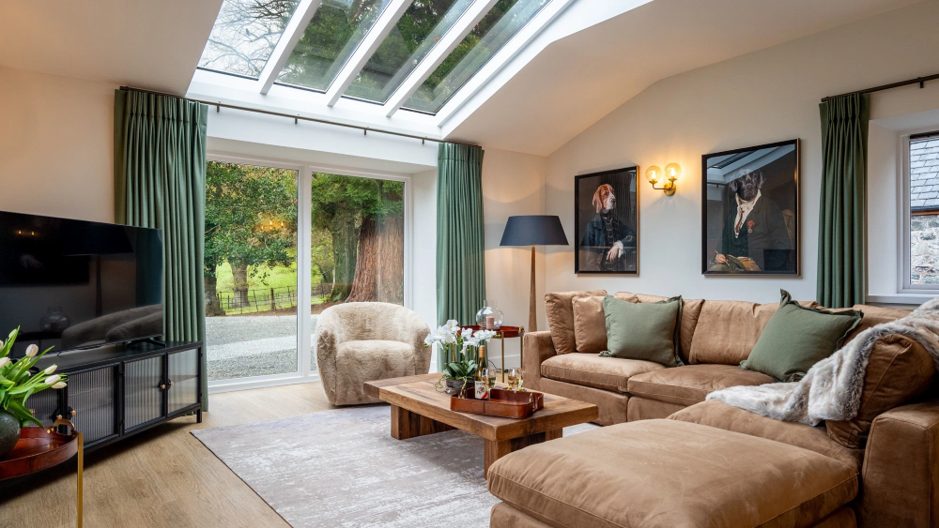
At the Coach House, a striking atrium ceiling floods the entrance hall with light, while tactile textures, rustic wood and soft lighting give the interiors warmth without losing the building’s character. Much of this is thanks to Cath, whose eye for the interiors, and influence over many of the decisions made throughout the restoration, has shaped how Plas Madoc looks and feels today. The Lodge, meanwhile, feels more intimate, with high ceilings, original detailing and old window bays carefully preserved during restoration. Even the repositioning of rock outside the kitchen was done to reveal one of the estate’s magnificent trees directly from the sink. Small decisions perhaps, but meaningful ones.
Because Plas Madoc is a place shaped by care. Not only now, but across generations.
Long before Ieuan became steward of the estate, he knew these grounds as a boy growing up nearby, slipping beneath the trees to collect conkers with his friends while the former owner, Captain Priddle Higson, chased them away in his white Volvo estate. It is the kind of memory many people carry somewhere within them; muddy shoes by the back door, pockets filled with conkers, the feeling of childhood afternoons stretching endlessly outdoors, sometimes with a touch of cheeky involved.
Decades later, after years building his business and working closely with local farmers and producers across North Wales, Ieuan found himself returning to the estate once again. Together, he and Cath took on the opportunity, and responsibility, of protecting its future.
And perhaps that long relationship with the landscape explains why the estate feels so grounded now. Ieuan and Cath approach Plas Madoc less like owners and more as custodians, conscious that places such as this are only ever held temporarily before being passed on again.
That sense of continuity runs throughout Plas Madoc. There is honey from the on-site beekeeper waiting for guests on arrival, harvested only metres away. Plans are underway to restore the old pond for wild swimming once more. Livestock graze the surrounding land, while produce grown nearby finds its way into kitchens and onto tables.
Nothing feels disconnected from its surroundings here.
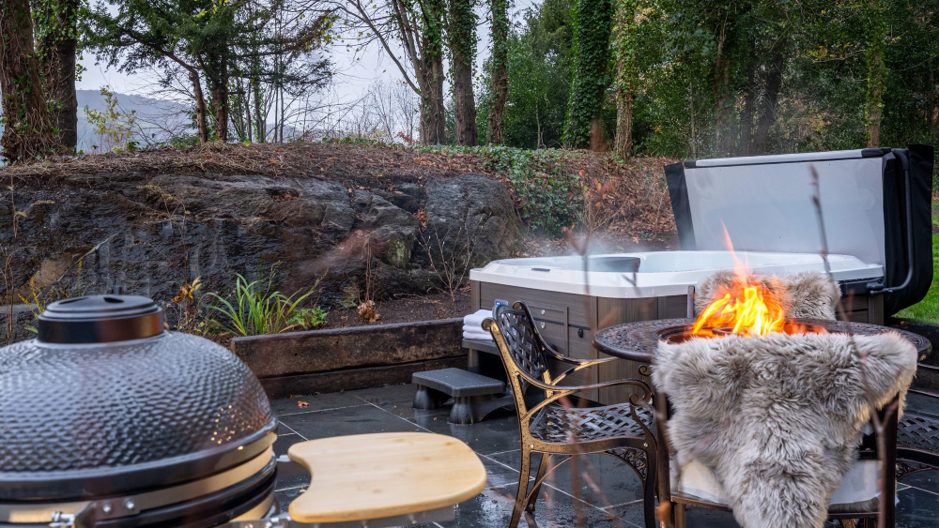
Some guests will spend entire days exploring the woodland paths and surrounding countryside before returning to the hot tub or lighting the fire indoors. Others may head towards nearby market towns, long lunches or walks through Eryri. Yet there is a strong sense that the estate itself encourages people to slow their pace slightly, wishing people to stay outdoors a little longer, to notice things properly again.
And long after people leave Plas Madoc, it is often the simplest parts they remember most: the smell of smoke from the barbecue at dusk, the stillness beneath the trees, the view from the kitchen window, or the feeling of sitting somewhere that has been loved, cared for and deeply connected to the landscape for generations.