Five Ways to Go Wild in North Wales This October Half Term
An October half term that’s a tightly timetabled procession of ticket barriers, gift shops and somebody asking whether it’s nearly lunchtime is no fun for anyone.
This year, take your cue from wild Wales: freer, muddier and unruly in the best possible way.
Watching a little one turn a fallen branch into a light sabre, magic wand or fishing rod is to see the joy of imagination-fuelled, screen-free play. It’s the same for us grown ups – given half a chance, and the right setting, we remember how to simply be. North Wales provides the woods, mountains and weather. You only need layers, curiosity (and a fairly relaxed attitude to laundry!)
Here are five ways to rewild your family half term.
1. Follow a Red Squirrel, Not an Itinerary
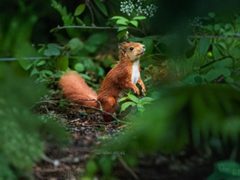
What do red squirrels eat, and where do they sleep? In Newborough Forest on Anglesey, where the pines conceal one of Wales’s great conservation success stories, all the important questions are answered.
Red squirrels were reintroduced here in 2004 and now thrive across the island. At Llyn Parc Mawr, an easy 1.5-mile discovery trail curls around the wildlife lake and through the trees, with information boards explaining what the squirrels eat, where they sleep and why this pocket of woodland matters.
Let the smallest naturalist set the pace. Look for a flick of russet in the branches, a nibbled cone on the ground or the sudden bounce of a tail overhead. Stop when they stop. Listen when they listen – this is a small expedition into somebody else’s world.
For another chance of a sighting, try the woodland at Plas Newydd, where red squirrels can often be spotted around Church Bank Wood and along the Menai Strait. October’s thinning canopy makes their treetop acrobatics a little easier to follow.
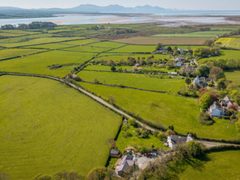
Back at Beudy Bach, the outdoors remains close. The cottage sleeps four near Newborough, while skylights overhead turn an afternoon shower into something worth watching. Count the raindrops, inspect the day’s treasures and decide, with great seriousness, which pinecone

2. Eat the Hedgerow, With an Expert
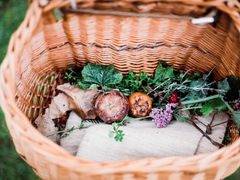
October turns North Wales into a rather magnificent outdoor larder. Hedgerows hold sloes, rosehips and haws; woodland floors produce fungi in improbable shapes and colours. For children, there is a particular thrill in discovering that food that comes straight from nature.
This is one wild pursuit where guessing is firmly discouraged. Wales grows poisonous plants and mushrooms beside edible ones, so join a guided forage and let somebody knowledgeable make the introductions. Discover the Wild runs fungi events in North Wales, while Wild Food UK offers courses from a historic farm estate near Dolgellau, surrounded by ancient oak woodland.
Take a basket instead of a plastic bag, learn a handful of species and leave plenty behind for the creatures that depend upon them. The aim is not to strip the hedgerow bare or arrive home with dinner for twelve. It is to look again at an ordinary lane and realise it has been laying a table all along.
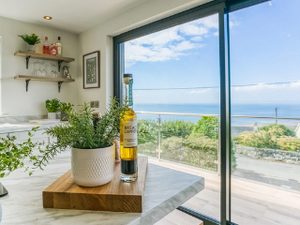
Carry your safely identified spoils back to Sŵn y Môr, where cooking comes with a view across Cardigan Bay. Blackberries can be folded into pancakes, crab apples simmered into jelly and toasted hazelnuts scattered over pudding. Beyond the windows, autumn works on a grander scale: brisker tides, white horses on the water and weather racing in from the west.
Forest gathered; pudding made; sea performing. A satisfyingly wild day all round.

3. Find Somewhere Big Enough for Your Wild Voice
Children spend much of the year being told to use indoor voices. North Wales has other ideas.
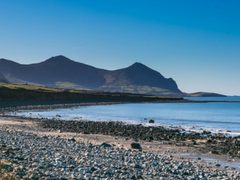
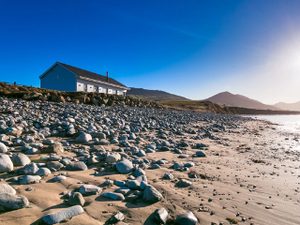
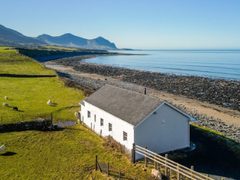
Dihangfa means a place of escape or refuge, and its position beside Aberdesach beach provides both. The mountains of Yr Eifl rise to the west, the sea reaches almost to the doorstep and this lesser-known sweep of coast remains blissfully removed from the busier beaches nearby.
In other words, there is room for a proper roar.
Walk onto the beach, check that nobody else is within earshot and stand facing the sea. Take one enormous breath, then send your best howl, dragon call or battle cry towards the horizon.
After the noise, try the opposite. Stand completely still and count how many sounds you can hear: waves drawing over shingle, wind worrying at the grass, a seabird overhead, perhaps an echo from farther along the shore. It begins as family silliness and ends with everyone listening as though the beach has just whispered a secret.
When cheeks are pink and voices satisfyingly worn out, Dihangfa is waiting behind the beach. Watch the sunset from the front door, retreat into the warmth and leave the sea to make the noise for a while.
4. Let the Weather Write the Day
Rewilding half term can also mean resisting the urge to rescue every empty hour.
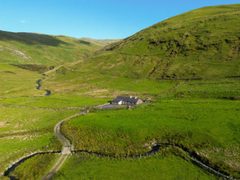
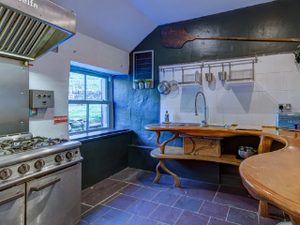
At Helfa, the itinerary disappears with the phone signal. This off-grid mountain refuge sits in Cwm Brwynog beneath Yr Wyddfa, reached by Land Rover and comfortably distant from almost everything else. Sleeping 14, it gives several generations of a family enough room to become pleasingly feral.
Give everyone a pocket-sized mission. Find five shades of green. Build a shelter for an imaginary creature. Map the journey of a raindrop. Gather fallen treasures for a wild crown. Nothing living needs to be picked, and nothing needs to look remotely Pinterest-ready.
Should the cloud come down, watch it erase and redraw the mountain. If rain rattles against the windows, listen for its changing rhythm. When the sky clears after dark, carry blankets outside and look for constellations.
The weather has not ruined the holiday. It has appointed itself chief entertainment officer.
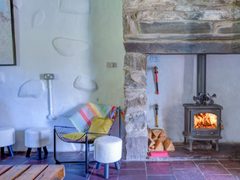
Eventually, come indoors rosy-cheeked, pile damp socks somewhere diplomatic and make hot chocolate. Wildness is all the better when it ends beside a fire.
5. Bring Back a Welsh Night of Spirits
Long before Halloween meant plastic cobwebs and multipacks of miniature chocolate bars, Wales marked Nos Galan Gaeaf: the night before the first day of winter, when spirits were believed to roam and nobody sensible lingered beside a stile, churchyard or crossroads.
Among its most gloriously alarming characters was yr Hwch Ddu Gwta, the tailless black sow. As the communal fire dwindled, an adult disguised in cloth or animal hide would emerge and chase the village children home. The last to leave risked being caught by the creature: an excellent piece of folklore and, (we imagine!), a remarkably efficient bedtime routine.
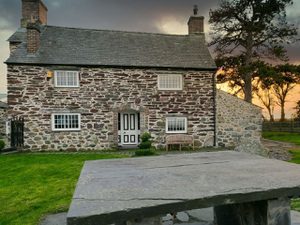
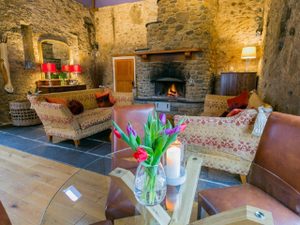
Give the tradition a gentler half-term revival at Tal y Bont Farm, where up to 30 can gather for tales around the fire. Turn down the lights and introduce the family to the tailless black sow; then bob for apples, once known in Wales as twco fala, or peel one in a single curling strip and throw it over your shoulder. According to another old custom, the shape might reveal the initial of a future love.
Once the story is finished, hand out the torches and venture into the garden for one last game: a dash through the darkness while a grown-up follows with some highly theatrical snorting. Then it is back inside for hot chocolate, pyjamas and a lively discussion about who definitely saw a black tail disappear around the corner. With everyone together beneath one roof, Tal y Bont Farm was made for the sort of family story night that may well become a tradition of its own.
Run Wild, Then Come Home
A wild Wales half term is not about conquering the landscape. It is about becoming curious enough to notice it.
Follow pawprints and tails. Learn the name of one mushroom. Shout into a valley and listen to what answers. Let rain change the plan and an old Welsh story follow you upstairs at bedtime.
North Wales has been keeping things wild for centuries. All you need is a bolthole at the edge of it.